What Is Mezzotint? The Printmaking Technique That Paints with Light
Discover one of the rarest and most labour-intensive printmaking techniques, and why artists have been captivated by mezzotint for more than 350 years.
When people think of printmaking, they often picture bold black-and-white linocuts or finely detailed etchings. Few have heard of mezzotint, one of the most demanding and beautiful forms of intaglio printmaking. Unlike other printmaking techniques that rely primarily on lines, mezzotint creates images through subtle transitions between darkness and light, producing prints with an extraordinary richness and velvety depth.
Because of the time and patience required, mezzotint is rarely practised today. Yet it remains one of the most expressive methods for capturing atmosphere, texture, and light.
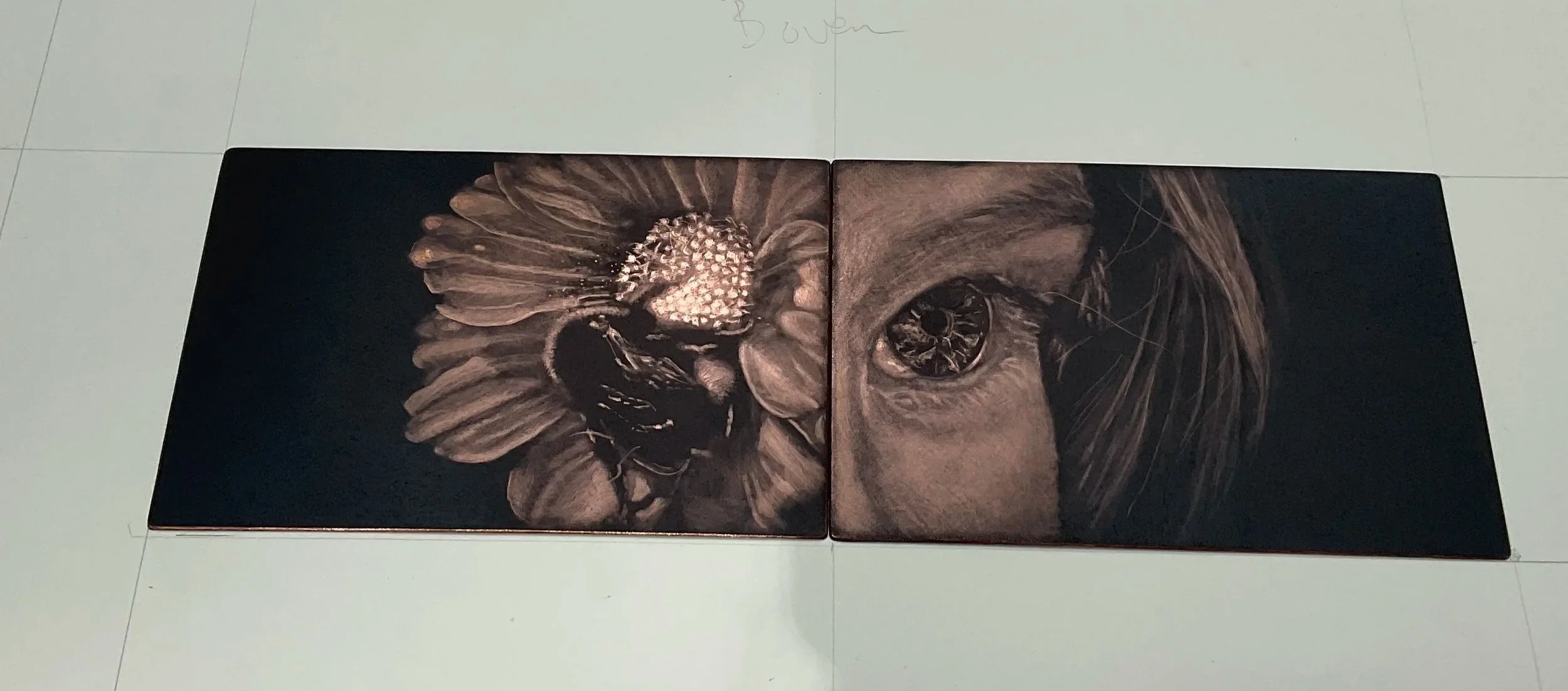
In my own printmaking practice, I use mezzotint to explore quiet moments in nature and human connection. It is the technique behind my ongoing Secret Garden series, where intimate portraits and botanical subjects emerge slowly from darkness.
What Is Mezzotint?
Mezzotint is an intaglio printmaking technique developed in the seventeenth century. Unlike relief printing methods such as woodcut or linocut, where the raised surface prints the image, mezzotint works by engraving a metal plate that holds ink below the surface.
What makes mezzotint unique is its starting point.
Instead of beginning with a smooth plate and adding lines, the entire copper plate is first roughened using a specialised tool called a rocker. Thousands of tiny teeth create an evenly textured surface capable of holding a large amount of ink.
If printed at this stage, the plate would produce a deep, rich black.
The artist then gradually works from dark to light by smoothing areas of the plate with scrapers and burnishers. The smoother the surface becomes, the less ink it holds and the lighter it prints.
Rather than drawing with lines, the artist is effectively sculpting light out of darkness.
Why Is Mezzotint So Difficult?
Mezzotint has a reputation for being one of the most physically demanding printmaking techniques.
Preparing a plate can take many hours before the image even begins. Every square centimetre must be rocked in multiple directions to achieve an even texture. Historically, artists often spent days preparing a single plate.
Once the rocking is complete, there is no shortcut. Every highlight, shadow, and transition must be created gradually by scraping and polishing the metal by hand.
Unlike digital editing or painting, where changes can easily be reversed, mezzotint demands careful decisions throughout the entire process.
This slow pace is part of what makes each print so special.
Why Does Mezzotint Look So Different?
The visual qualities of mezzotint are unlike any other printmaking technique.
Instead of relying on engraved lines or carved marks, mezzotint creates continuous tonal transitions that resemble charcoal drawings or oil paintings.
Its distinctive characteristics include:
velvety blacks
luminous highlights
soft atmospheric transitions
remarkable depth
subtle textures
rich tonal contrast
These qualities make mezzotint especially suitable for portraits, botanical subjects, still life, and scenes where light plays an important role.
Mezzotint Compared with Other Printmaking Techniques
Many visitors ask about the difference between mezzotint and the printmaking techniques I use elsewhere in my work.
Mezzotint
Intaglio printmaking
Copper plate
Tonal image
Rich blacks
Soft transitions
Printed with an etching press
Linocut
Linocut is a relief printing technique where the image is carved into linoleum. The raised surface receives ink while the carved areas remain white.
Linocuts often feature bold shapes, graphic contrasts, and multiple layers of colour. My From Flower to Food series uses the reduction linocut technique, where each colour is carved and printed from the same block.
Woodcut
Woodcuts also belong to relief printmaking but retain the natural grain of the wood, creating expressive textures that differ from linoleum.
My Library series uses woodcut to emphasise structure, architecture, and the tactile qualities of carved timber.
Each technique offers different possibilities, but mezzotint remains unmatched for its subtle rendering of light and atmosphere.

Why I Chose Mezzotint for Secret Garden
The Secret Garden series explores the quiet relationships between people, plants, insects, and memory.
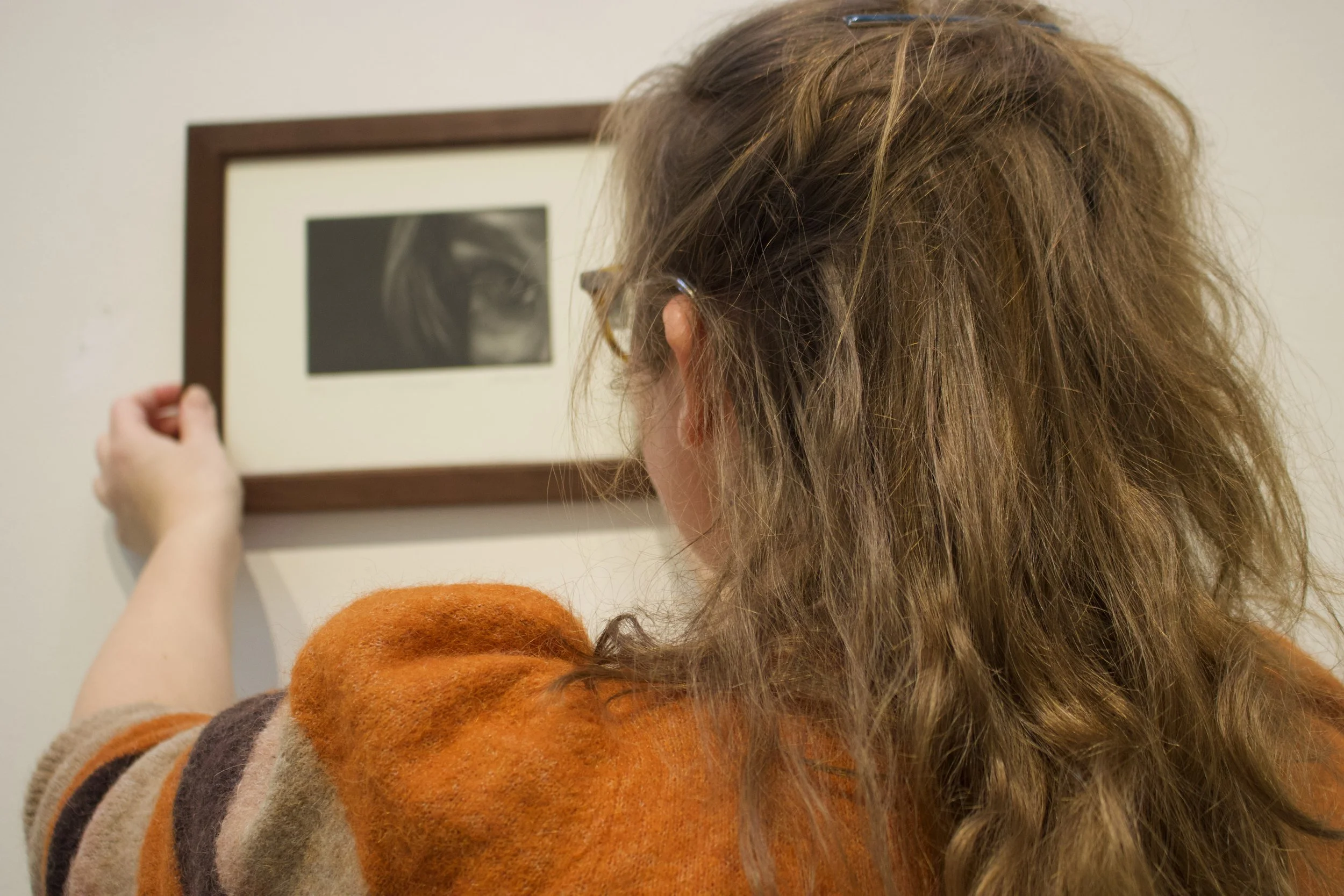
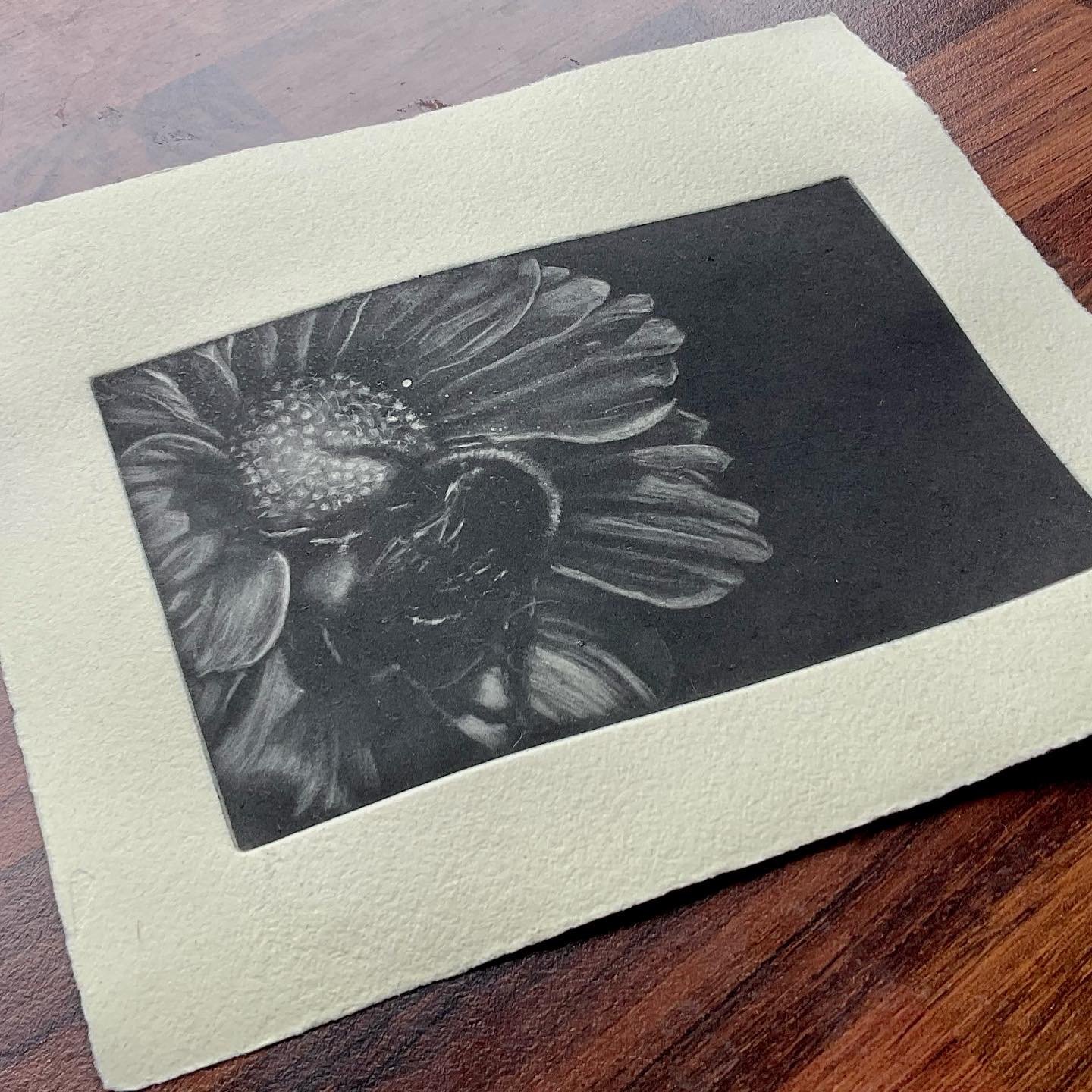
One print focuses on my daughter's eye and half of her face, inviting the viewer into a moment of stillness and curiosity. Another depicts a bumblebee resting on a cosmos flower, celebrating the small yet essential interactions that sustain biodiversity.
These subjects share something delicate and fleeting.
Mezzotint allows them to emerge gradually from darkness, almost as if they are being discovered rather than simply represented.
The technique mirrors the experience of walking through a garden at dusk, where light reveals only fragments and encourages closer observation.
Why Original Mezzotints Are Special
Unlike mass-produced reproductions, every mezzotint is printed individually by hand.
The plate is inked, carefully wiped, and run through an etching press together with dampened printmaking paper. Small variations in wiping, pressure, and ink distribution mean that every impression has its own subtle character.
Many artists print relatively small editions because the immense pressure of the press slowly wears the plate over time.
Owning an original mezzotint means owning a genuine handmade artwork created through one of the oldest and rarest printmaking traditions still practised today.
A Slow Way of Making Art
In a world of instant images, mezzotint represents something different.
It cannot be rushed.
Every stage requires patience, concentration, and countless small decisions. The process itself encourages slow looking—both for the artist and for the viewer.
Perhaps that is why mezzotints invite such close attention. Their depth, softness, and quiet atmosphere reward those who take the time to pause.
Through the Secret Garden series, I hope to share that experience: encouraging viewers to notice the beauty hidden in everyday moments and the subtle connections between ourselves and the natural world.
Frequently Asked Questions
What is mezzotint?
Mezzotint is a traditional intaglio printmaking technique that creates images through tonal values rather than engraved lines. It is known for its rich blacks and smooth transitions between light and shadow.
Is mezzotint handmade?
Yes. Every stage—from preparing the copper plate to inking and printing—is completed by hand.
Why are mezzotints expensive?
A single mezzotint can require many days of work. The preparation of the plate, careful scraping, hand printing, and limited editions all contribute to its value.
Are your mezzotints original artworks?
Yes. Every print is hand-pulled from the original copper plate, signed, numbered, and produced as part of a limited edition.