Circadian Rhythm: Woodcuts Exploring Light, Landscape, and Human Biology
This ongoing series of woodcut prints explores the relationship between circadian rhythms, natural light, the fjord landscape, and the invisible biological processes that shape human life. Through the four works Melatonin, Growth Hormone, Oxytocin, and Om å henge saman, I investigate how the environment around us influences the rhythms within us — from sleep and regeneration to connection, emotion, and belonging.
Living and working in Sunnmøre on the west coast of Norway, I am surrounded by dramatic seasonal changes. The low winter light, long summer days, changing weather, and constant presence of mountains and fjord create a landscape where the relationship between humans and natural rhythms is impossible to ignore. These daily observations became the starting point for exploring how external cycles of light and season are reflected in our own bodies.
The series grew from a fascination with the connection between landscape and physiology. My background in radiography has shaped the way I observe structures and systems, and in these works I combine scientific curiosity with the expressive possibilities of traditional woodcut. The hormones become visual symbols of the invisible processes that connect us to ourselves, to other people, and to the natural world.
Melatonin — Light, Darkness, and the Rhythm of Rest
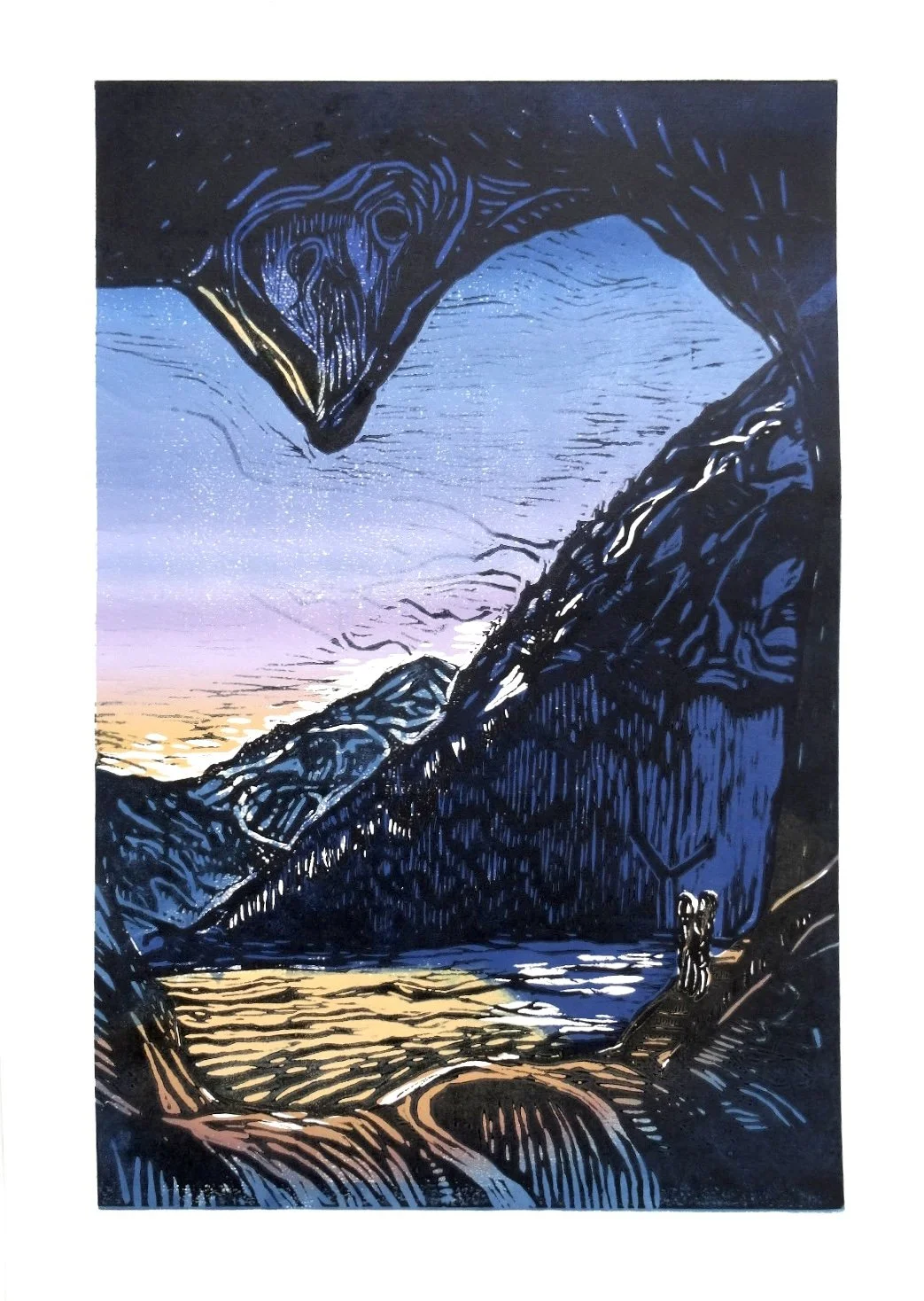
Melatonin explores the relationship between natural light and the body’s internal clock. The work is inspired by the winter sunrise over the mountain ridge visible from my home in Sunnmøre. Light entering the eye provides essential information that helps regulate our circadian rhythm and the timing of hormones connected to sleep and wakefulness.
The landscape becomes more than a place — it becomes an active participant in human biology. The changing qualities of natural light remind us that our bodies are still deeply connected to the cycles of the earth.
Growth Hormone — Regeneration Through Rest
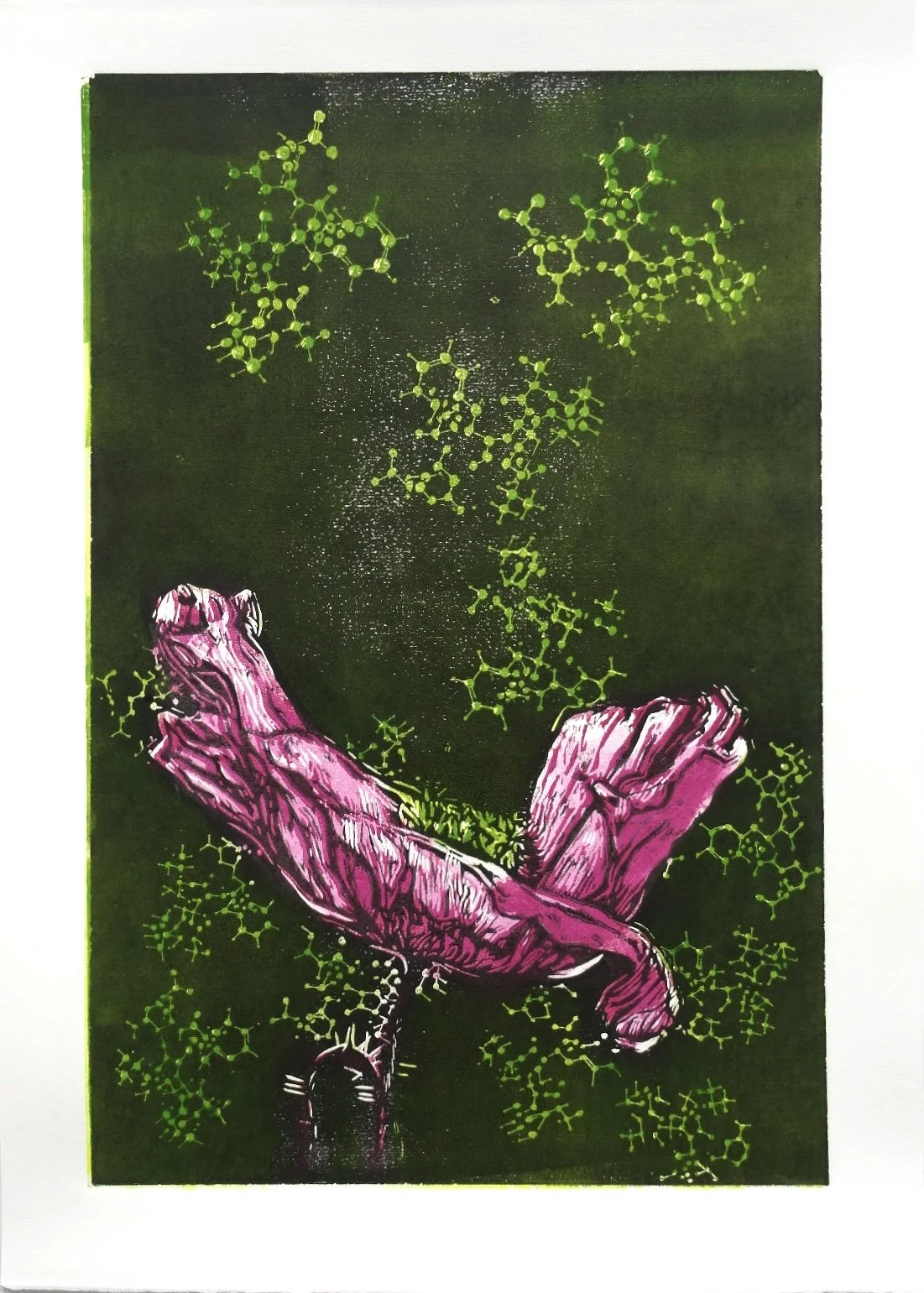
Growth Hormone focuses on the relationship between sleep, repair, and renewal. Inspired by a pink poppy from my garden, the flower becomes a symbol of growth and regeneration. During deep sleep, growth hormone plays an important role in the body's processes of repair and restoration.
By placing the molecular structure of the hormone alongside the flower, the work creates a dialogue between the microscopic and the visible — between biological processes inside the body and cycles of growth found in nature.
Oxytocin — Connection and Belonging
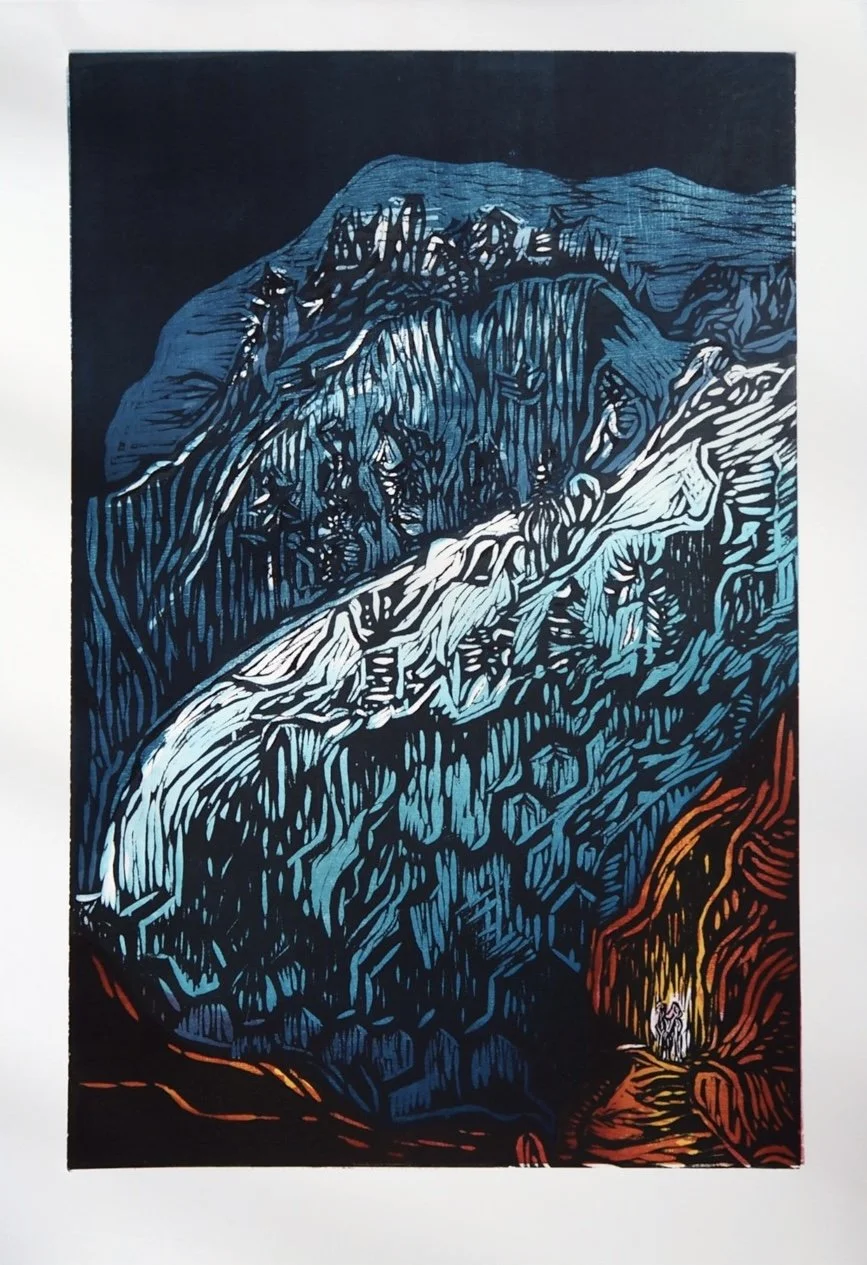
Oxytocin explores the hormone associated with connection, trust, care, and social bonding. Inspired by the mountain landscape surrounding my home, the work reflects on the ways humans are shaped not only by physical environments but also by relationships and a sense of belonging.
The landscape becomes a metaphor for connection: layers of rock, history, and human presence existing together over time.
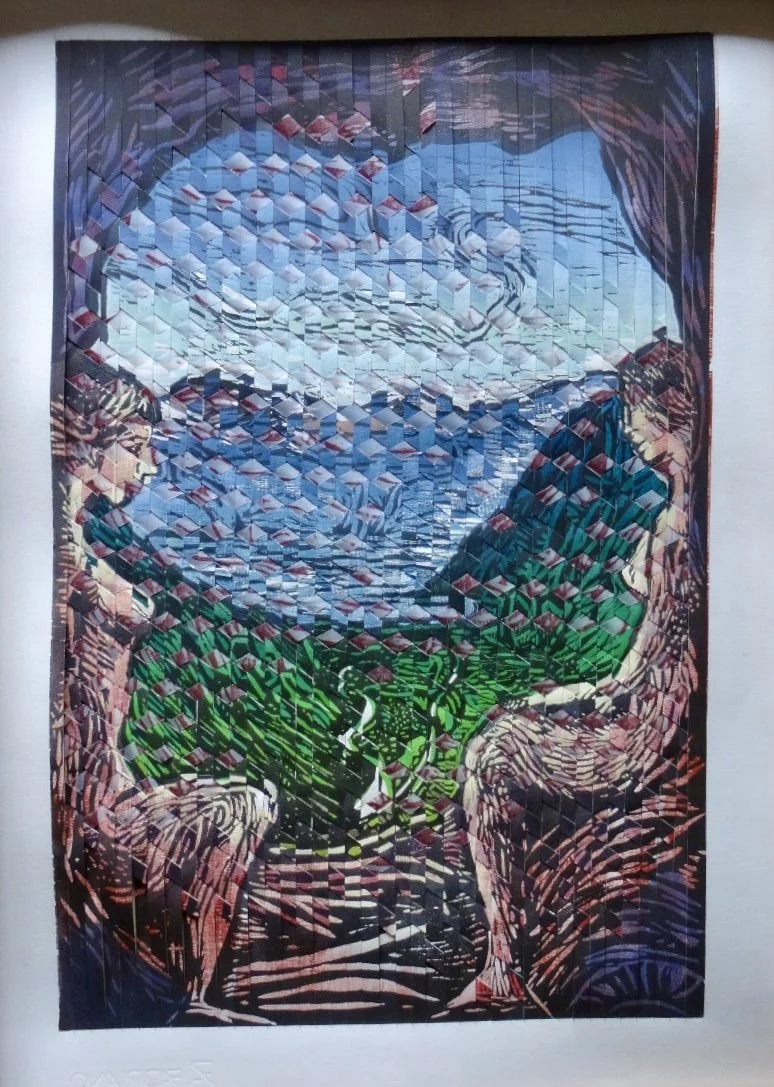
Om å henge saman — The Threads That Connect Us
The final work in the series, Om å henge saman (a Norwegian phrase meaning “to belong together” or “to be connected”), brings the themes of the series together.
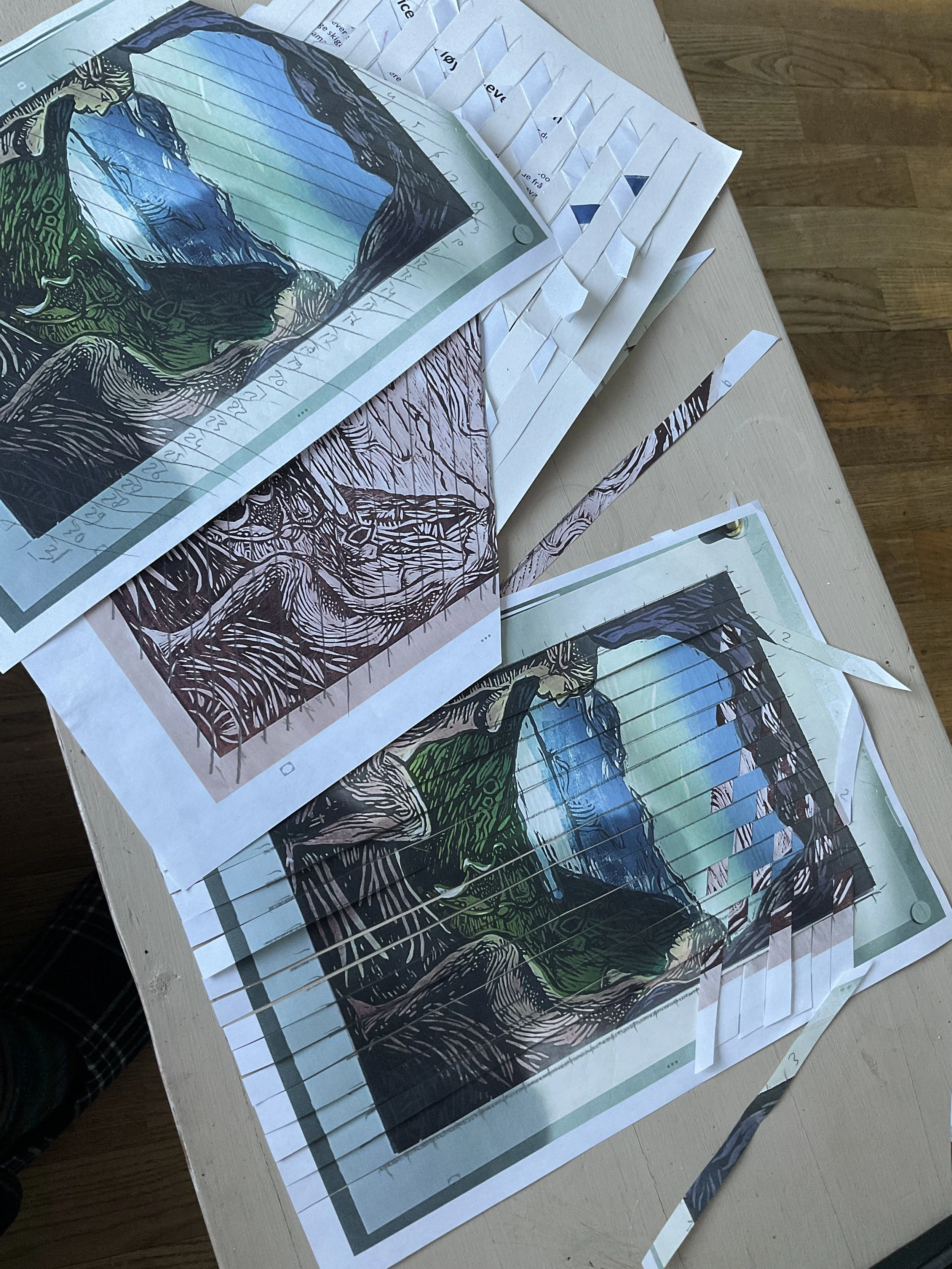
The work is constructed as a woven installation of three woodcut prints. Two identical prints are combined with a third print showing only the red key plate, creating a physical structure where separate parts become connected through repetition, overlap, and interaction.
The idea of weaving comes from an earlier project exploring the hormone cortisol through linocut. By carrying this method into the woodcut series, I create a link between different bodies of work and between different emotional and biological states. The title can be understood both literally and metaphorically: the prints are physically joined together, while the concept reflects the many invisible threads that hold life together — biological systems, relationships, memories, landscapes, and shared experiences.
The Woodcut Process — Layers, Connections, and Transformation
Each work in the Circadian Rhythm series is created using traditional colour woodcut techniques, combining several approaches including layered printing, gradient transitions, and a puzzle-like construction method.
The puzzle technique allows different carved sections of the wooden plates to come together as parts of a larger image. Like the biological systems explored in the series, each individual element has its own function while contributing to a connected whole. The technique creates a visual relationship between separation and unity — between individual structures and the larger systems they belong to.
Through multiple layers of ink, carved textures, and gradual colour transitions, the images are built slowly over time. Gradients allow colours to move between states, reflecting the continuous transitions found in nature: sunrise and sunset, seasons changing, growth and decay, activity and rest.
The physical process of carving and printing mirrors the themes of the series itself. Each layer adds information, each mark leaves a trace, and the final image emerges through a gradual accumulation of connected parts.
Because every print is created by hand, subtle variations occur between impressions. These differences are part of the character of original woodcut printmaking and make each artwork a unique expression of the process.